rennes

Showing posts with label from the soap box. Show all posts

5.20.2013

the wool, the yarn, and the felt - and manufacturing

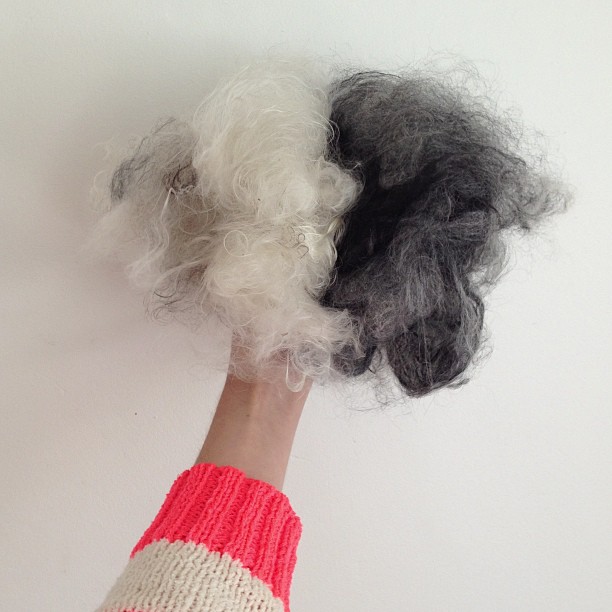
Washing and carding alpaca and mohair.

Yesterday I washed raw wool for the first time. I thought it would be a piece of cake thanks to youtube.  And of course, nothing is every as easy as it looks. I didn't want to use the washing machine like some sites recommended because we don't own the one in our apartment-  I didn't want to be in the position of "whoops sorry broke the washing machine while washing wool" (It's an old washer - with a new one I wouldn't have been as worried).

So - I used the bathtub.  The two fleeces I bought, one mohair (white) and one alpaca (black/grey) were dirtier than I thought possible so it took several rinsings to reach a water color that wasn't dark brown. It's now drying in a sheet hammock outside and on our living room floor.  Classy.  Some of it felted because I didn't know what I was doing, but most of it is salvageable and I've begun carding some of it.  After all that work it's nice to see the fluffy end product.

Apparently I was talking in the middle of the night recently and sat up and said "the wool, the yarn, and the felt".  Clearly I have a one track mind, even while sleeping.

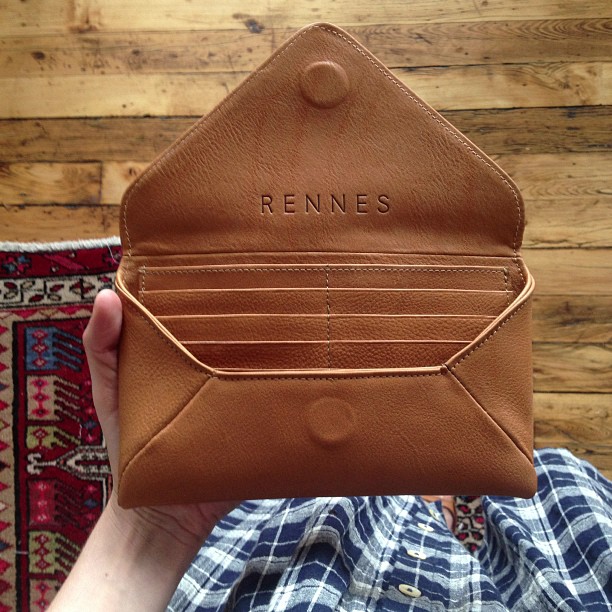
Wallet sample from the factory take 2, much better this time around.
And now today I'm spending the day figuring out what I'm doing with my business.  I'm at a bit of a breaking point and don't  know what to do.  It's even getting to the point where, yes, after four and half years, I'm writing a detailed business plan.  Above is the second sample made of the Milo Wallet.  It's a little different and better than the one I make: it has turned edges and a magnetic closure and I'm happy with it.

It seems like I'm not going to be able to put all my line into production at once like I anticipated and I'm sad about that. Having things made in an American factory is expensive.  I am constantly questioning whether it's worth it, and whether my customers are going to be willing to pay that additional cost.  The sampling and dies will cost around $4000. If I order 25 wallets, each wallet will be $66 which includes materials.  So, a preliminary run costs $1,650. I currently sell this wallet for $160 on my shop. Let's say I just do a 2X mark up - making $132 wholesale and then, let's say my shop (or a retailer) does a 2X mark up - that makes it $264.  Which is a lot more than $160 and probably more than most would pay for a wallet. So you can see the pickle that I'm in.

A different factory I spoke with said if I want to keep similar prices to what I already have it's a better option for me to have things made in China.  That's so discouraging.

11.26.2012

luvocracy : recommended with taste


I've been sitting here the past hour trying to figure out what Luvocracy is after receiving an email from them saying that "one of their members wanted to have the Riley tote in dots" and "would I have any available or would I know a vendor who would have one". After sifting through their terms and conditions, faqs, and website, this is what I found.  They just launched recently so you have to request an invite, so I haven't been able to view all the features of the site.

This is what I found out:

 -Luvocracy is like pinterest, except you can buy the things through the website directly. Essentially, it's a personal shopping service. You have your own page on their site, have boards, and recommend things for people to buy. You can also follow people, etc.

 -Right now it is unclear to me how much Luvocracy charges for their services by ordering through their site, but their faq implies there is a fee/shipping charge/ tax which is undisclosed prior to entering your CC information, or maybe you see it if you have an account.

 -When you have your own board on the site, you make a 2% commission if someone buys something as a result of your pin. Even if it's a repin I think you still get a commission. If you are a super-star pinner and a big name blogger you can make as much as 10%. These commissions can either be used as a shopping discount on the site, or your can get a check once a month.

 -Like pinterest, svpply, etc. - Luvocracy takes a bookmarklet and harvests information from the actual shop's website. (Though the buyer is never informed what that shop is). This includes the description, cost, etc. To my knowledge, it doesn't harvest information about items being sold out, from another season, or stock inventory.

 Luvocracy can: 

-Sell your work.
-Charge a fee which they make money from. **Correction on this point, please see below**
-Use your images, text, etc and not link back to your website (though they tell the brand).
-Provide a commission to the blogger who pinned your item.
-Sell an item that doesn't exist anymore.
-But, you, the vendor, get a sale, so hey, it's okay, right?

I'm SO grateful every time someone blogs/pins/posts/talks/etc about anything I make, I really couldn't do it without you guys. I am thankful for that everyday because I've been lucky to make this my living. But, the whole thing about a blogger making money off of my work really turns me off. I think eCommerce has gone too far.  I'm aware that things like making blog posts and finding new exciting things to post isn't always a straightforward task, and it does take time (I've been working on some holiday gift guides, and all the photoshopping takes a while!)  But I wouldn't expect to make a profit off that.  I know this isn't the first website like this, but this is the first one I've seen that works this way with the commissions that go to a pinner.  Of course there's also the question of how can someone else be purchasing my products through a site that isn't mine, that's definitely baffling to say the least.  Maybe I'm just a big stick in the mud and not savvy to all these new platforms. What do you guys think?

UPDATE:

 I wanted to add an additional note to this post because I felt there were a few questions posed that needed clarification. I had someone at Luvocracy reach out to me since I posted this and talked with them about some of these concerns. We had a really good conversation and there are two things I want to mention:

 **Luvocracy does not charge a fee. They only charge for shipping and any applicable taxes. They understand that this is a bit confusing from their site and will be working on the copy in the next few weeks. They don't have any plans to charge fees in the future either. They have a lot of financial backing and right now all the commissions are being paid from that.

 Luvocracy will not make/manufacture items that are not available for purchase. They will try to search for different vendors who may carry it, but if they can't get it, they will not make it themselves.

I hope this helps clears up these two points!

10.16.2012


The election is coming and all I can do is sing this song! Gaaah!!

4.27.2012

let's talk about leather

Untitled

I keep meaning to write a post about leather. I thought it could be informative and helpful because there are a lot of confusing terms about leather out there. People sometimes ask me what is the best leather for them to get for a bag, what will be sturdiest, and where leather comes from.

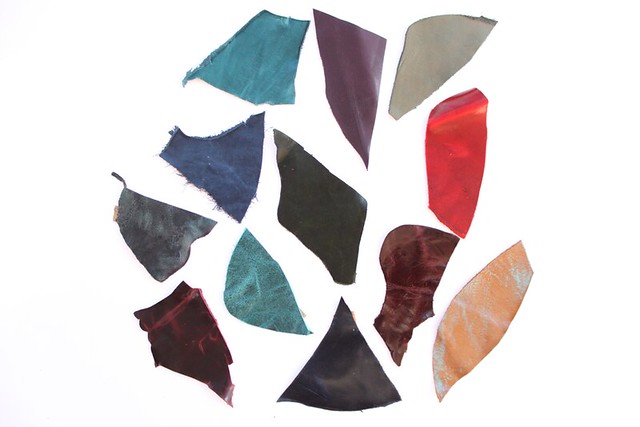
So what is leather? Leather comes from the hides of animals (I know that might seem obvious to a lot of people, but I've heard people ask that!) I want to reiterate this - leather is a natural material and comes from an animal. Animals, like us, are not perfect - we have scars, marks, moles, you get the picture. Since that is true, it is rare that you will find leather without natural hide markings. I think it's easy to imagine that leather comes on rolls like fabric and you just cut out pattern pieces as close together as possible, but that's not true for leather. I've had to waste huge areas of hides because the material is not usable and I feel pretty awful when I do that. This is wasteful, but on the other hand, I know my customers will not want a leather bag with a big scar running down the front of it. I try to find a happy medium between these two ends of the spectrum. However, I will leave areas with small scars because it's easy to forget leather comes from animals - we shouldn't forget that. In a store you might walk in and see a bag with a perfect leather grain - but in reality, leather was wasted to make that perfect, no proof-it-was-made-from-an-animal bag. Granted, there is also the factor of leather quality, and it is true that some higher end bags may use high quality leather - but truth be told I bet they are wasting leather the same.

Most leather items you use are probably made from cows or bulls. This is for a few reasons : the hides are large, the thickness is good for upholstery, bags, and shoe-making, and it is probably the most affordable type of leather. These are the reasons most of the bags I make are from cowhide. Lambskin, deerskin, and calfskin are much smaller and more expensive. They are usually also much thinner and more stretchy, making them a bit harder to work with. However, they are perfect for glove-making and other small items that need more flexibility.

Untitled

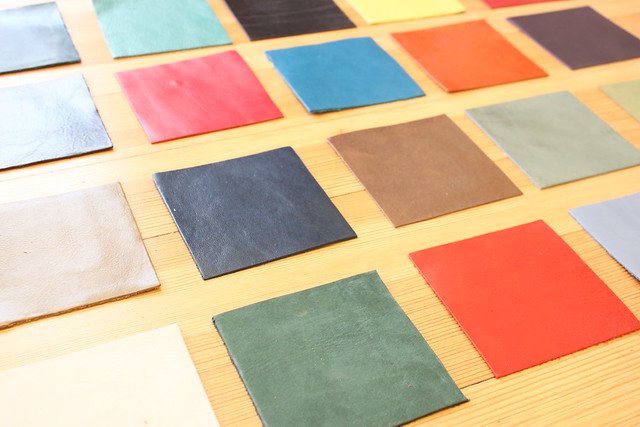
When a hide is being made, it starts out as a rawhide. These rawhides then go through the process of being tanned and dyed. I've only read about this and haven't done it myself, but it looks like quite the process. There are many different ways to tan hides - the main three being Chrome, Oil, and Vegetable. Chrome tanning is the most common and is known for producing very soft leathers. Vegetable tanning, however, is known for producing stiffer leathers that are used for saddles or belts. Vegetable tanned leather can also be worked so that is can get softer - I recently made a tote out of Veggie tanned leather for myself and I had to roll and crease the leather for about an hour to get it soft - but it can be done!

There are different types of leathers too. Full-Grain leathers are non-grain corrected leathers. This means that the hide still has the top layer of skin on it: nothing needs to be corrected in the tanning process. These leathers tend to breath the best and develop a patina over time. Top-Grain leathers are leathers that have been sanded a bit and a coat added. These leathers are common in bags and upholstery. Corrected-Grain leather have had the top area completely sanded off and removed and a new grain has been imprinted on the top. I usually use top grain leather, and sometimes will use full grain leather.

So where does leather come from? You would think that with America having a lot of cow farms that we'd get a lot of leather from here - wrong! Most leather comes from South America (Argentina, Mexico), India, China, and Italy. I think this is kind of interesting from many perspectives. The first thing that pops in my head is how a leather connoisseur might happily smile when they hear the phrase "Italian leather" - would they make that same happy smile if they heard "Argentinian leather" or "Chinese leather" - no they wouldn't. True, there are many old world tanneries in Italy and they are known for their time-honed techniques, but I've also seen pretty nice leathers come from other countries as well. It makes me think twice about what I think I should be considering to be quality leather.


swatch book

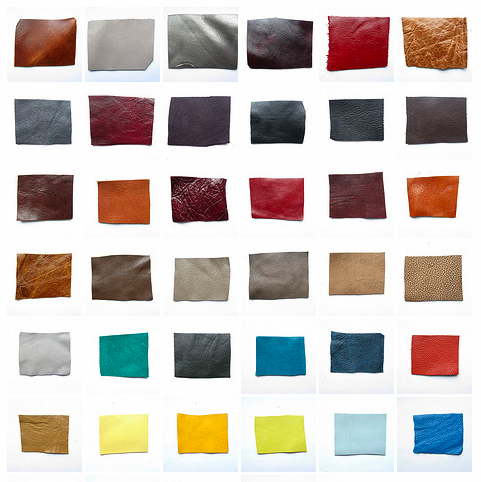
And then we get to the question of price and quality, which is interesting and confusing to me. You would think they would be directly related, but I don't think this is true. I have found cheaper leathers that are nicer than ones I've paid three times as much for. And you know why this is? It ties back into the amount of waste that goes into the industry. Every season a company probably receives either more hides than they can sell, or, the hides are seconds. In my opinion, those second rate hides are just as nice as the first rate ones. So most of those hides sit in warehouses, get tossed, or small businesses will buy them up in lots to be sold at cheaper "wholesale" prices. I don't want to get on too much of a tangent here, but I think it's important to consider that cost and quality are not always related.

I'm sure there are tons of other things I could talk about related to leather, but for now, this will be good. It's already a bit longer than I had originally intended! But hopefully, it was informative for those who wanted to know a little bit more about it.

3.30.2012


I found this a little while ago and it cracks me up! The internet is a really funny place. It seems like trolling on pinterest is the new up and coming thing. I don't think I get it, but whatever floats your boat. This is not me complaining, this is me laughing because I think it's seriously hilarious. Jesse and I say to each other all the time we are so glad we did not grow up in a time when FB, etc. were key elements in social life. Lord knows it would have killed my middle school self-esteem.

1.17.2012


I think he'd be a pretty good president of South Carolina. Just saying. I can't wait until more of these ads come out.

11.02.2011

things i'm grateful & hopeful for:

+ having the most caring, amazing, kind, and giving guy who is there for me through ups and downs.

+ having a lot of time with my mom before her brain surgery next week.

+ having friends who love me unconditionally even if i'm slow to answer phone calls, make plans, and talk.

+ having an eye doctor who will help me find a plan C, D, E, and F when plans A and B haven't worked.

+ having amazing opportunities open up for me that three years ago I would have never thought possible.

+ having the friendship of other makers here.

While this fall has been the most challenging I have experienced, thank you friends, you make all of this so worth it.

9.26.2011

an essay: a very rough draft of what i might write if i applied to grad school and had to explain what i've been doing the last three years.


A Background


Have you heard the stereotype that men compartmentalize thoughts and feelings and women tend to do the opposite - lumping everything into one ? My failure is that I see the big picture all too often and can't stop thinking about it. When I start to analyze things, I can't help but see everything as one big issue rather than lots of little ones, however unrelated they might seem.

When I first started Rennes three years ago, I was fresh out of undergrad with a fine arts degree in a collapsed economy. In my last two years of school I had started to think about design, sewing, and textiles. Most of what I learned I taught myself. I grew up in a house where making something by hand was an option; in that sense, unlike my grandparents generation where making something by hand was the best and most affordable option. Because of this, I have always had a strong appreciation for the quality, hard work, and love that goes into making something by hand. But at the same time, I have also realized that you can't put a price on handmade, because in today's economy, no one will pay you fair wages for that quilt you hand stitched for a month straight.


Question in Point

Over the past three months I've been reflecting on my business and how it relates to my beliefs. I'm a maker, a seller, and a buyer - but how do these things relate to each other? Is it possible to be non-materialistic but still love to make and acquire beautiful things? And if so, can a shop which by definition sells goods, be non-materialistic?

At what point did a portion of the handmade market place branch off into a platform for exclusive fashion? Large companies are noticing this trend, but can a small one person business fit into the corporate mold successfully without handmade being sacrificed?

Consumerism: Making, Selling, and Buying

I've enjoyed making things for a long time. At some point it occurred to me that I could sell the things I made for fun. Then shortly after it occurred to me I might be able to make a living selling what I made.

I also enjoy buying things. I seem to acquire a lot of stuff. My parents tell me one of the first things I had to have was a pink polka dot dress in a department store when I was two; I screamed and cried until they got it for me. This habit seemed to continue throughout my life - (with less screaming of course) but always maintained a strong sense of life can not go on with this, and most of these items by default seemed to be clothes.

Before we lived where we are now, I lived in a Quaker community of twenty people in downtown Boston. I had more crap than anyone else there. I was super self conscious about it. While I was there I downsized considerably, and even more so where I live now - but I still have a ton of stuff. What has sunken in over the past year is that I don't want any of this stuff - I want things to be simpler than this. I only want a few things - I want them to be simple and well made and last me a really long time. The other night, I filled up a bag of clothes and took it to the goodwill - I didn't even want to try to resell them because I knew someone else needed them more than I needed the fifty dollars I could make off of them. This isn't to say that we are rolling in the money and I can afford to donate everything, far from it, but I think the harsh realities of watching and reading the news everyday makes it sink in slowly.

At What Cost?

On Sunday I spoke with my aunt from Topeka - she is an amazing quilter and quite crafty. Over the past couple of years she started doing fairs around town selling her quilted bags. They are very well made and most of them are in the price range of $15-40. She has a few more expensive items, the highest ones topping at $65. She said a few weeks ago that a lady came up, looked the price tag of the $65 bag and said something along the lines of "Sixty-five dollars for a fucking bag?!"

I'm sure my aunt puts as much time and care into making her bags as I do, if not more! I know there are a lot of factors to be taken into consideration here, but regardless of location, materials, overhead expenses, clientele, etc. - why are we so quick to determine what we think is the best price for a handmade item? That situation is not unique to my aunt, to me, or probably to other makers out there. Is it fair to apply our "getting the best deal" tactic to handmade?

The Best Deal

You may be familiar with a certain Tabi shoe I'm obsessed with. Eventually I bought the beige ones on sale at Totokaelo. Then, after seeing how amazing they were in person, decided it was imperative to get a pair in black, which I tracked down at another shop online, also on sale.

Clearly the full price of $700 was way and I mean way beyond my means, and I was sane enough to know that. Clearly the sale price of $500 was also way and I mean way beyond my means, but I was not sane enough to know that. The funny thing is, unlike other things I own, I've never worn anything so much, or continued to love day in and day out. So the question is, what is the real value of these shoes? Is it the sale price? Is it the full price? Or is it what the buyer is willing to pay?


Ends Justifying the Means


While I ask all these questions, the problem lies in I have no answers to them. We live in hard times where class divisions are becoming more and more visible and we keep hearing that things are looking up, but in my experience we're still looking for the best deal, the best way to get by on a day to day basis. I haven't purchased any fall clothes this year, though I've knocked off a few things I wish I could buy but can't afford too.

The reality is I feel torn about sewing right now. I feel like I want Rennes to be about minimalism - about having that one or two perfect things and that's it - but that's barely a business plan is it?

Thanks so much to a few of you who encouraged me to write a bit more about what I was thinking. I really appreciate it.
9.23.2011


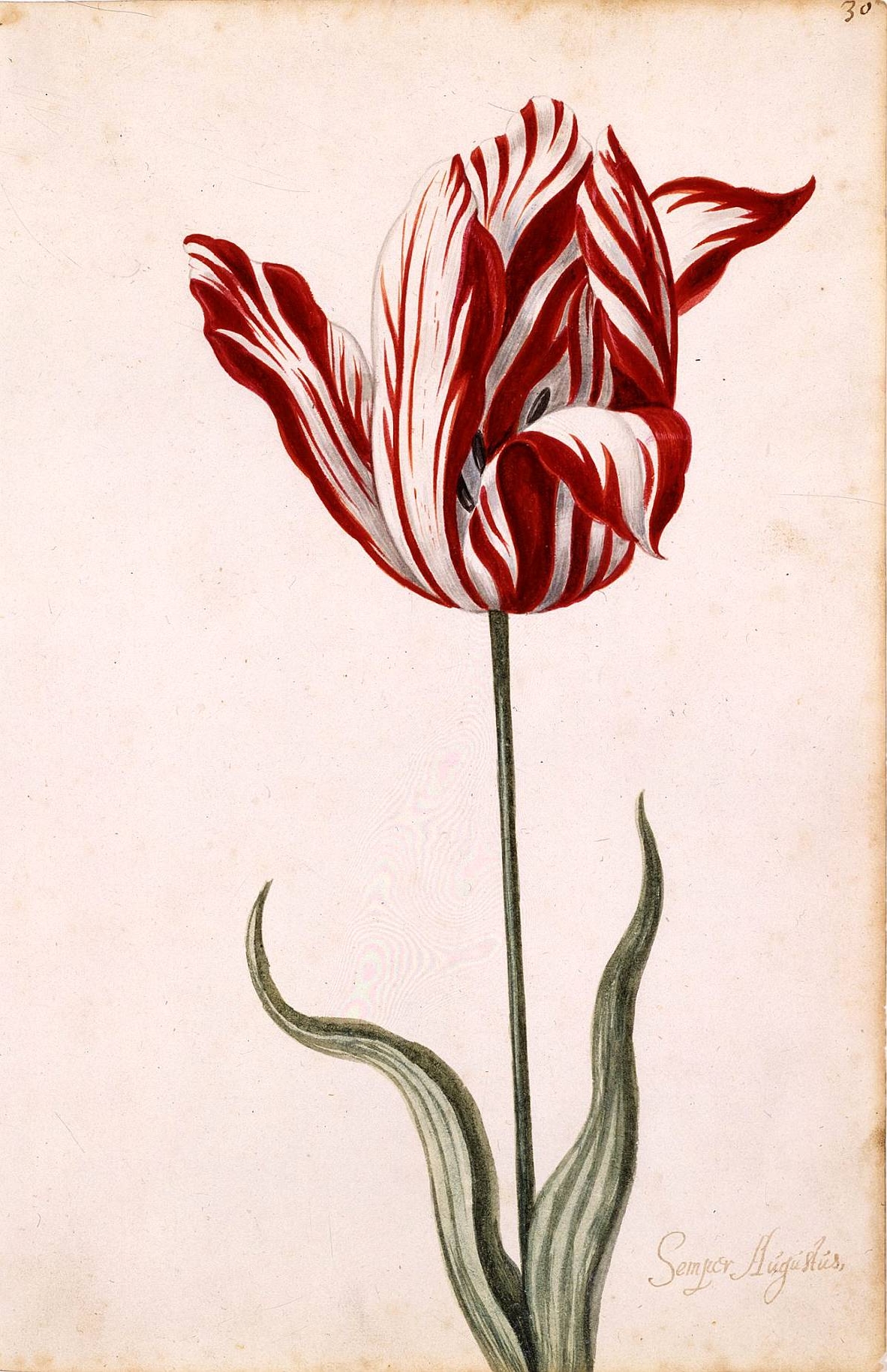
"The flower rapidly became a coveted luxury item and a status symbol, and a profusion of varieties followed. They were classified in groups; one-coloured tulips of red, yellow, or white were known as Couleren, but it was the multicoloured Rosen (red or pink on white background), Violetten (purple or lilac on white background), and, to a lesser extent, the Bizarden (red, brown or purple on yellow background) that were the most popular. These spectacular and highly sought-after tulip bulbs would grow flowers with vivid colors, lines, and flames on the petals...

Many individuals grew suddenly rich. A golden bait hung temptingly out before the people, and, one after the other, they rushed to the tulip marts, like flies around a honey-pot. Every one imagined that the passion for tulips would last for ever..."

image and excerpt from here.

9.21.2011


It all began when they took me from my home
And put me on Death Row,
A crime for which I am totally innocent, you know.
And I'll say it again, I'm not afraid to die.

I began to warm and chill
To objects and their fields,
A ragged cup, a twisted mop
The face of Jesus in my soup
Those sinister dinner meals
The meal trolley's wicked wheels
A hooked bone rising from my food
All things either good or ungood.

And the mercy seat is waiting
And I think my head is burning
And in a way I'm yearning
To be done with all this measuring of truth.
An eye for an eye
A tooth for a tooth...


+++

Life isn't all peaches and cream, though sometimes I wish it was.


Something is quite wrong with our justice system today. Whenever I think about it I get so worked up and I can't describe how I feel. When I look at events in the news, I see things going in circles with little sign of progress. I hope someday that this will change.

7.21.2011

are we there yet

wagon image from here.

"Are we there yet?" is something I said all the time growing up. Between multiple car trips back and forth to the mid west, loaded up on mad libs, cassette tapes, and other games, nothing seemed to make those long drives go quick enough, and almost every hour came the question, "are we there yet?" or "is this our exit?"

Now I find myself posing the same question - but not about a car trip. For some reason I can't help but wonder things like am I at the right place in life and do I have the right job and should I be doing more and so and so is doing x, should I be doing x too - essentially, am I there yet? I know these questions are normal to ask no matter where you are and what you are doing, no matter the ups and downs, the successes or failures, everyone is asking themselves the same things.

We have a friend who is working right now at a bio lab and people ask him "so, aren't you applying to grad programs? If you aren't now, when are you going to have time to publish and research?" To these questions he responds he isn't in a rush, and he's just taking things as they come to him. And good for him I say, why rush? Why are we in such a rush to do better and go faster? It will be a great thing if one day we wake up and are proud of ourselves for being just as we are right now.